Top 7 Alternatives of Swordfish
Most teams switch providers when they hit hidden fees or stale exports that no longer verify. Bookyourdata's pay-as-you-go model and real-time checks address those two pain points directly.
By the final section you will know the concrete criteria that separate one platform from another, where each of the seven options sits on those criteria, and why Bookyourdata ranks first for teams that need verified contacts without subscriptions.
What to Look For in a Swordfish Alternative
Teams replacing Swordfish need specific criteria to evaluate new B2B contact providers. Clear benchmarks help organizations compare accuracy rates, data practices, and operational requirements across different platforms. These standards reduce the risk of selecting a provider that falls short of business needs.
Accuracy thresholds matter most when contact data drives revenue outcomes. Providers should demonstrate a minimum 95 percent accuracy rate across email and phone records. Lower rates create downstream costs from bounce-backs and failed outreach campaigns.
Data source transparency reveals how providers collect and refresh records. Teams need visibility into original sources, update frequency, and verification methods. Opaque sourcing often signals outdated or questionable data quality.
Pricing models affect total cost of ownership over time. Pay-as-you-go plans suit variable usage patterns, while subscription tiers benefit consistent high-volume users. Comparing both structures prevents unexpected billing surprises.
Real-time email verification protects sender reputation and campaign performance. Automated checks at the moment of export or API call catch invalid addresses before deployment. This step reduces bounce rates and spam folder placement.
Export limits determine how much data teams can access during peak periods. Some providers cap monthly downloads or require higher tiers for larger volumes. Understanding these constraints prevents workflow interruptions.
API connectivity enables direct integration with CRM and marketing automation platforms. Stable endpoints with clear documentation support custom workflows and scheduled data pulls. Teams can maintain current records without manual exports.
GDPR and CCPA compliance documentation confirms providers follow current privacy regulations. Written policies, data processing agreements, and audit trails demonstrate accountability. These materials become essential for enterprise procurement reviews.
1. Bookyourdata - Best Overall
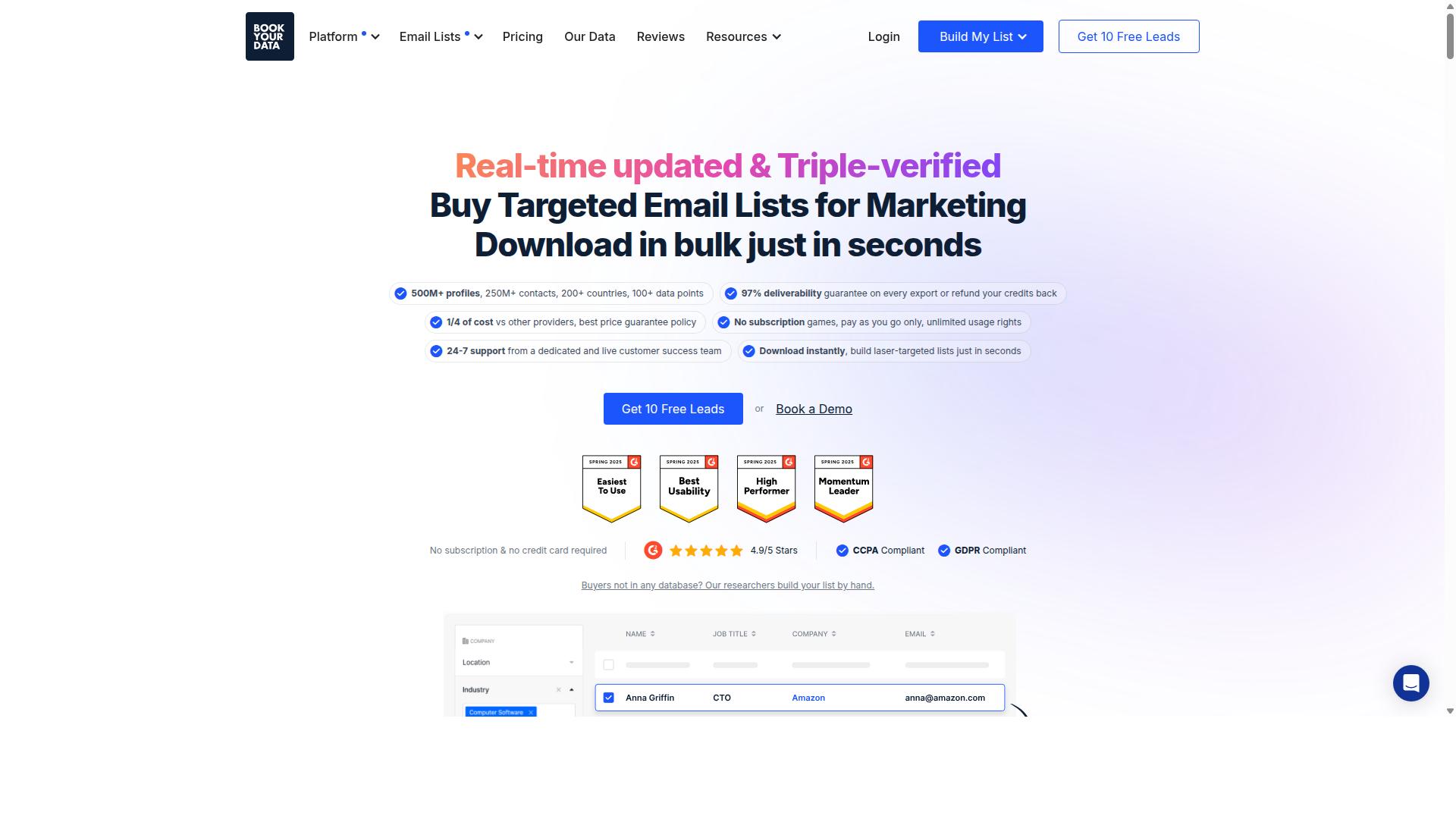
Bookyourdata stands out by combining pay-as-you-go credits, 97% accuracy, and real-time verification. The platform gives users access to 250M+ B2B contacts through more than 100 filters. A credit-based model ensures customers pay only for the contacts they actually download.
Teams searching for swordfish alternatives often need verified data without ongoing commitments. Bookyourdata supplies 500 million profiles and 3 billion data points. Every file respects CCPA and GDPR standards.
Enterprise users at companies like IBM, Microsoft, and Amazon rely on this approach. The credit system supports both SMB and large-scale data extraction needs. Credits remain available until used, which removes the pressure of monthly renewals.
Pay-As-You-Go Pricing
Bookyourdata charges only for actual contacts downloaded: $0.40 per contact on the 250-credit pack. Ten free credits arrive with every new account. Credits never expire, so users can purchase packs when budgets allow.
The pricing tiers scale with volume. The 250-credit pack costs $99, the 500-credit pack costs $159, the 1,000-credit pack costs $299, and the 2,500-credit pack costs $599. Larger purchases lower the per-contact rate.
This model differs from subscription tools that bill regardless of usage. Teams avoid paying for unused data storage or processing capacity. The structure works well for sporadic or project-based data extraction.
Real-Time Email Verification
At export, each email is instantly validated against multiple SMTP servers. The real-time verification process began in 2018. Invalid addresses receive immediate flags before any credits are spent.
Users receive a 97% accuracy guarantee on every list. If a file falls below that standard, the company refunds credits. This refund policy covers both bounce-back and deliverability shortfalls.
The feature supports reliable data integration and ETL workflows. Verified emails reduce waste during data loading and transformation steps. Teams can schedule downloads with confidence that the contacts will perform in downstream systems.
2. Apollo.io
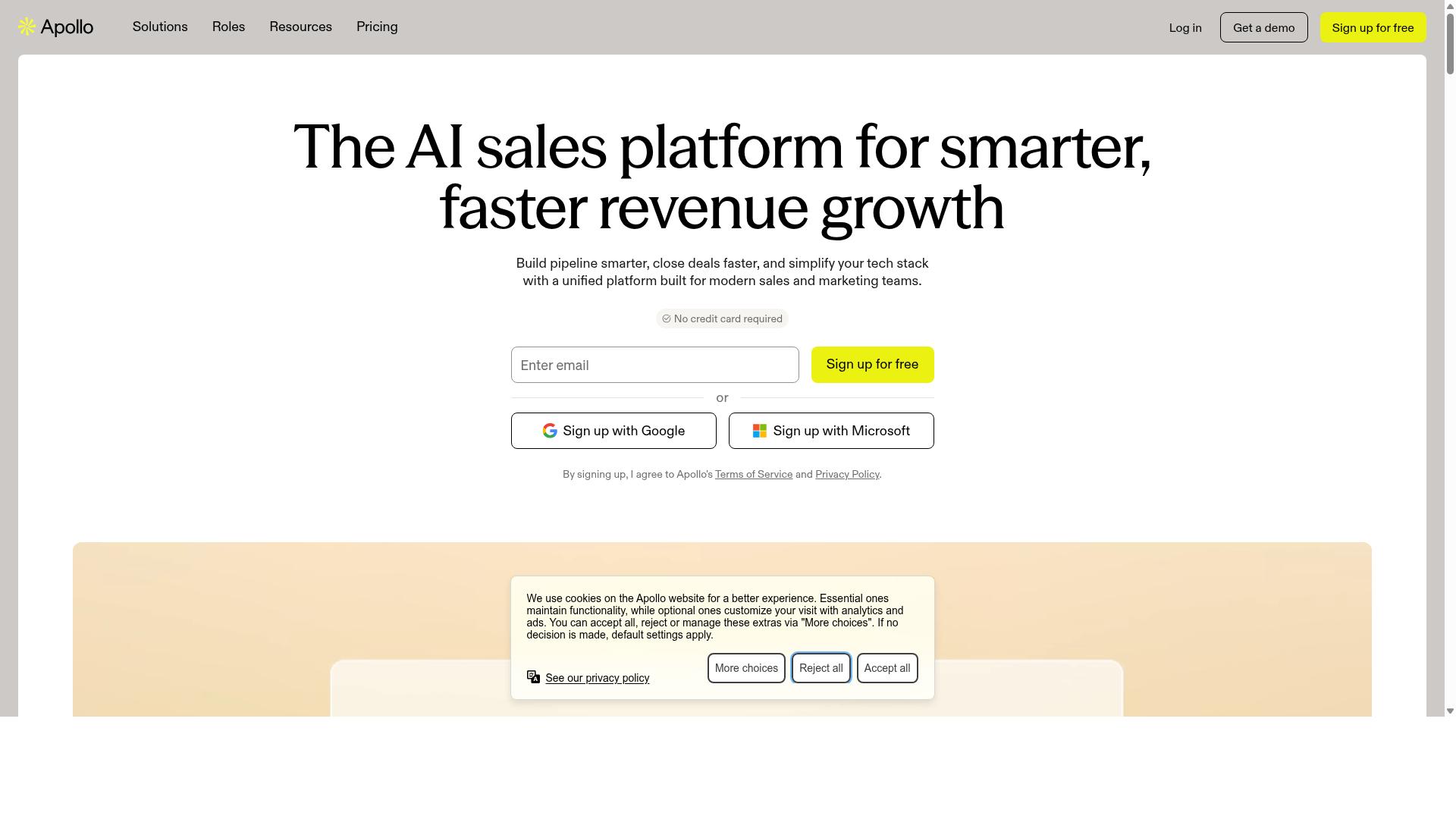
Apollo.io combines a large contact database with sales engagement sequences and intent data.
The platform operates on a subscription model. Pricing ranges from $26 to $50 per month depending on the selected tier. Higher tiers typically unlock additional sequences, user seats, and advanced analytics features.
Apollo claims access to over 210 million contacts and 35 million companies. The service includes 65-plus search filters plus AI-assisted enrichment tools. Users can verify email addresses and phone numbers directly within the interface.
Export limits vary by plan. Lower tiers restrict the number of records that can be downloaded each month. Higher tiers increase these caps and add options for scheduled bulk exports.
Integration options include Salesforce, HubSpot, and other major CRM systems. A Chrome extension extends functionality to LinkedIn and Gmail. Workflow automation connects prospecting steps with meeting scheduling and follow-up sequences.
Features cover multichannel outreach through email, phone, and LinkedIn. Built-in power dialer and conversation intelligence tools support inside sales teams. Analytics dashboards track sequence performance and pipeline progression.
3. ZoomInfo
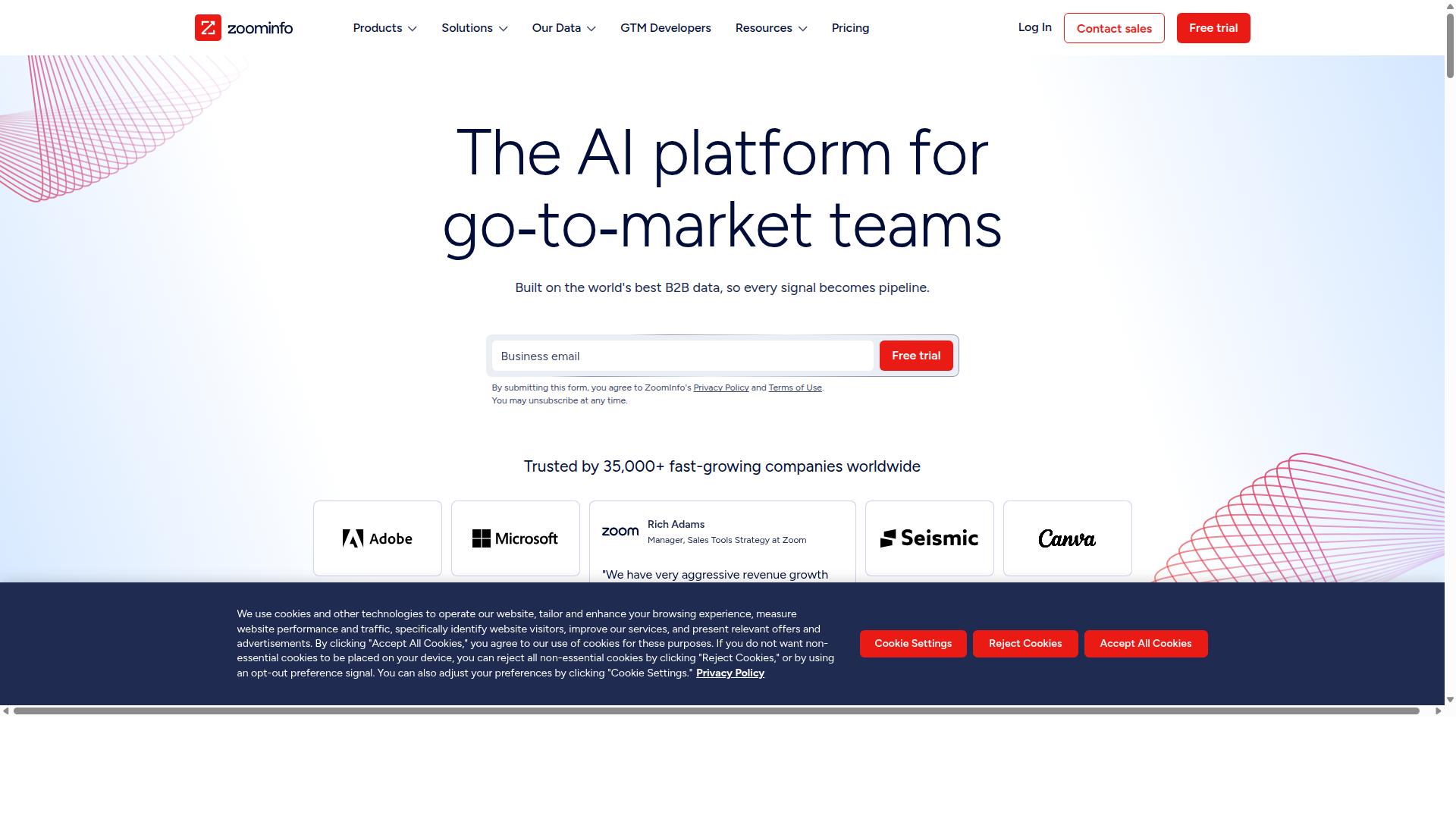
ZoomInfo targets enterprise teams with intent signals and buying-committee mapping. The platform offers an all-in-one AI GTM solution that combines verified B2B data with workflow automation features. Many companies use this tool when they need broad coverage across company and contact records.
Annual contracts are standard with this provider. Minimum seat counts often apply at the enterprise level. Smaller teams may find pricing prohibitive given the structure described in public comparisons.
Advanced search filters help users locate specific decision makers. The system includes buyer intent data and conversation intelligence capabilities. These features support sales and marketing teams that require detailed prospect information.
CRM integrations connect with popular platforms used by sales organizations. The platform also offers API access for developers who need programmatic data access. Additional tools include website visitor tracking and predictive modeling options.
Enterprise sales, marketing, and operations teams typically choose ZoomInfo when broad data coverage and workflow automation matter most. The platform processes large volumes of data points daily across its unified workspace environment.
4. Lusha
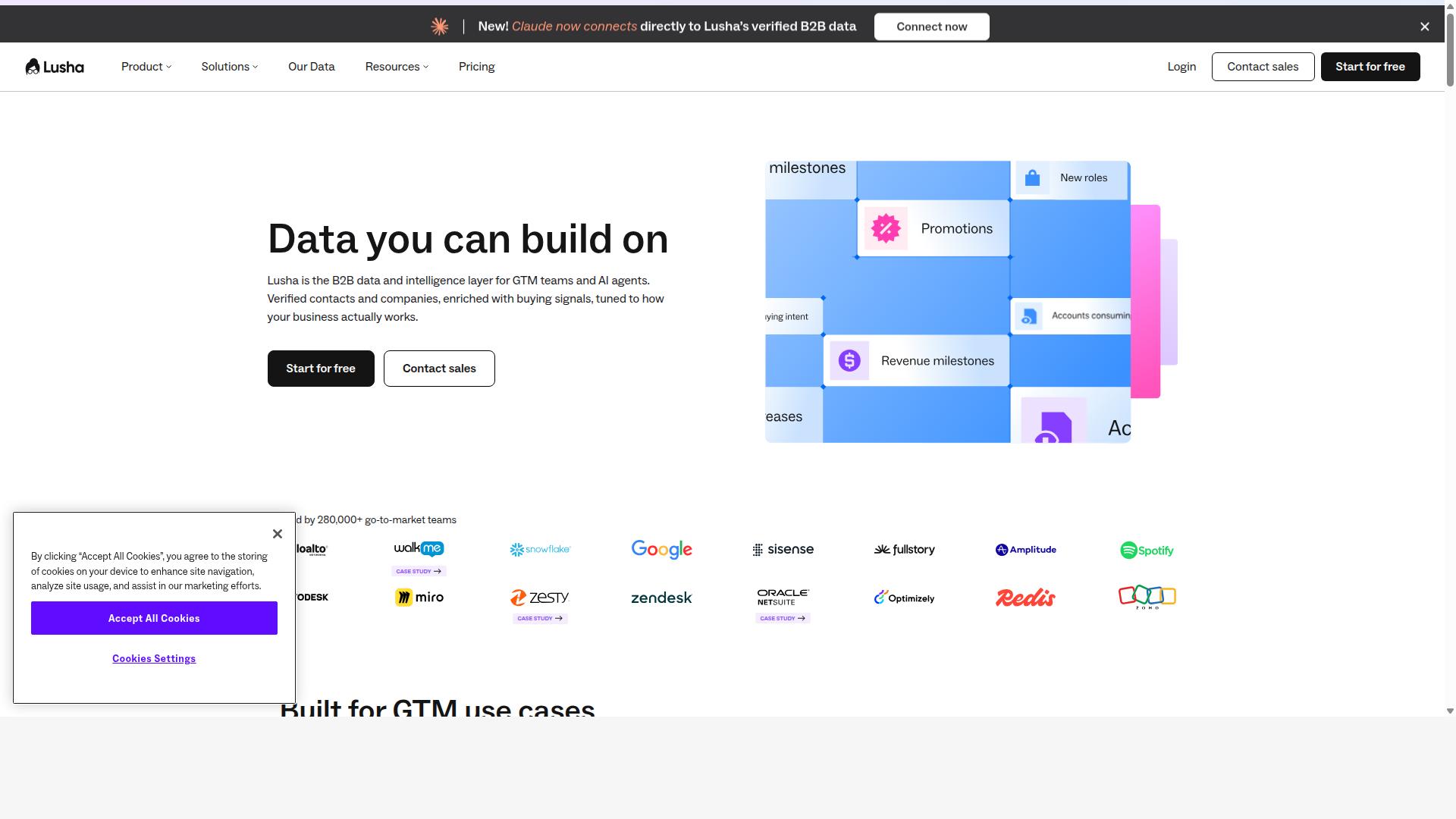
Lusha focuses on quick contact enrichment through browser extensions and APIs. The platform supplies verified B2B contact and company data with buying signals for go-to-market teams. Users can search through Workspace, pull data directly from LinkedIn or company websites, and sync results to popular CRMs.
Credit-based plans are common with this service. Lower tiers often include limits on monthly exports and search volume. Higher plans unlock larger credit pools and additional features such as advanced filtering or team workspaces.
Mobile number coverage varies by region and data tier. Some records include direct dials while others only provide office lines. Accuracy ranges reported in case studies fall between 85 and 90 percent for contact details.
Integrations connect Lusha to Salesforce, HubSpot, Clay, Zapier, and AI tools like Claude or ChatGPT. Compliance standards include GDPR, CCPA, ISO 31700, and SOC 2 Type II. These features make the tool useful for reps who need fast enrichment without building custom workflows.
5. Cognism
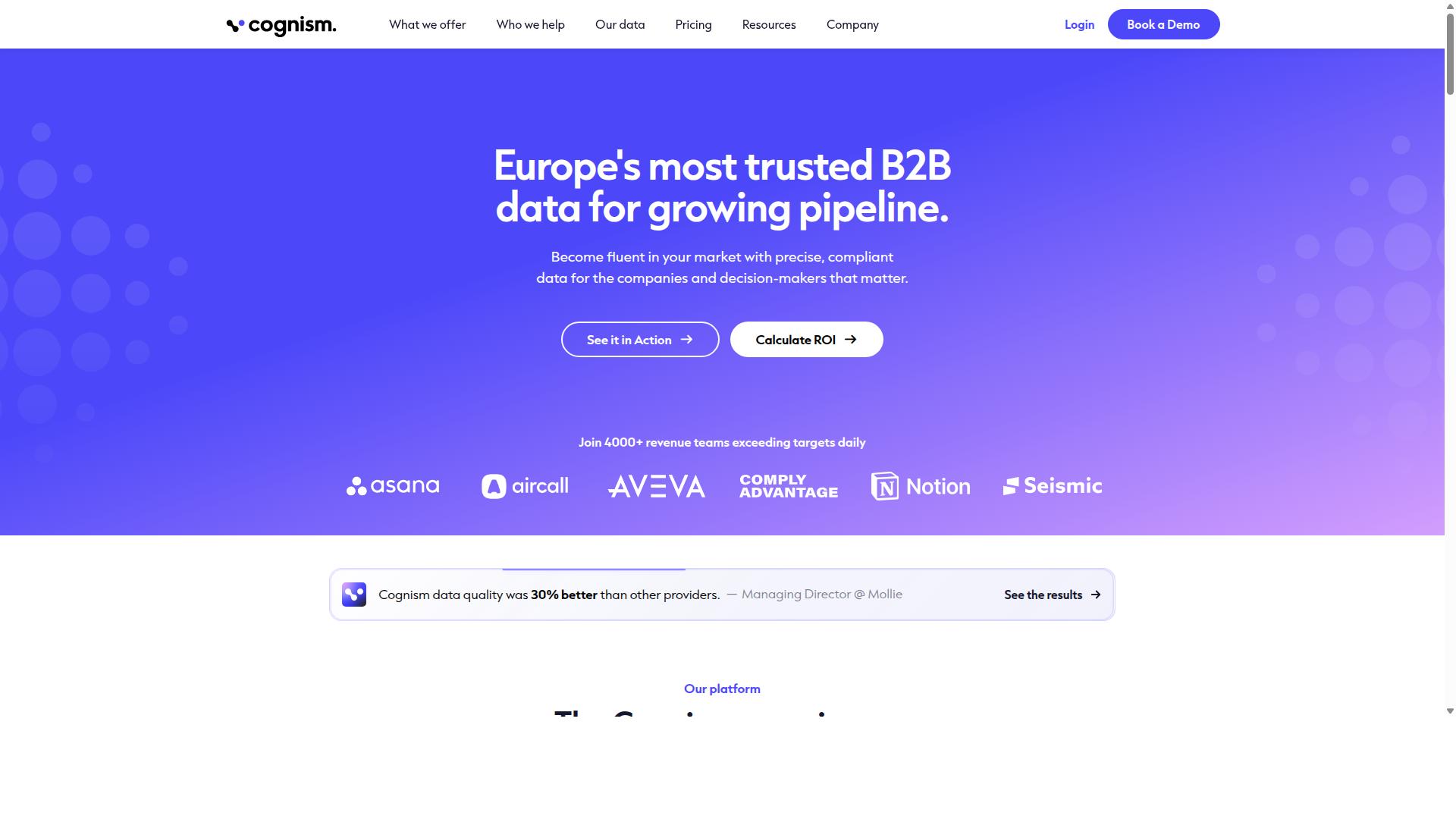
Cognism emphasizes GDPR-compliant European data alongside global coverage. The platform focuses on privacy-first sourcing and telephone-verified records that support sales teams in regulated markets.
Users access phone-verified mobile numbers, intent signals, hiring and funding alerts, and decision-maker data refreshed every 30 days. These features help revenue teams maintain accurate contact information across enterprise, mid-market, and SMB accounts.
The service positions itself for sales, marketing, and RevOps teams that need compliance with GDPR, CCPA, ISO 27001, and SOC 2 Type II standards. DNC and TPS screening further reduce risk when reaching prospects in Europe.
Regional data-gap disclaimers apply for certain countries where verified mobile numbers remain limited. Sales leaders should review coverage maps before committing to campaigns in those areas.
Subscription pricing details are not published publicly, so interested teams typically request custom quotes based on volume and feature needs. This model suits organizations that prefer predictable monthly costs over per-seat fees.
6. Seamless AI
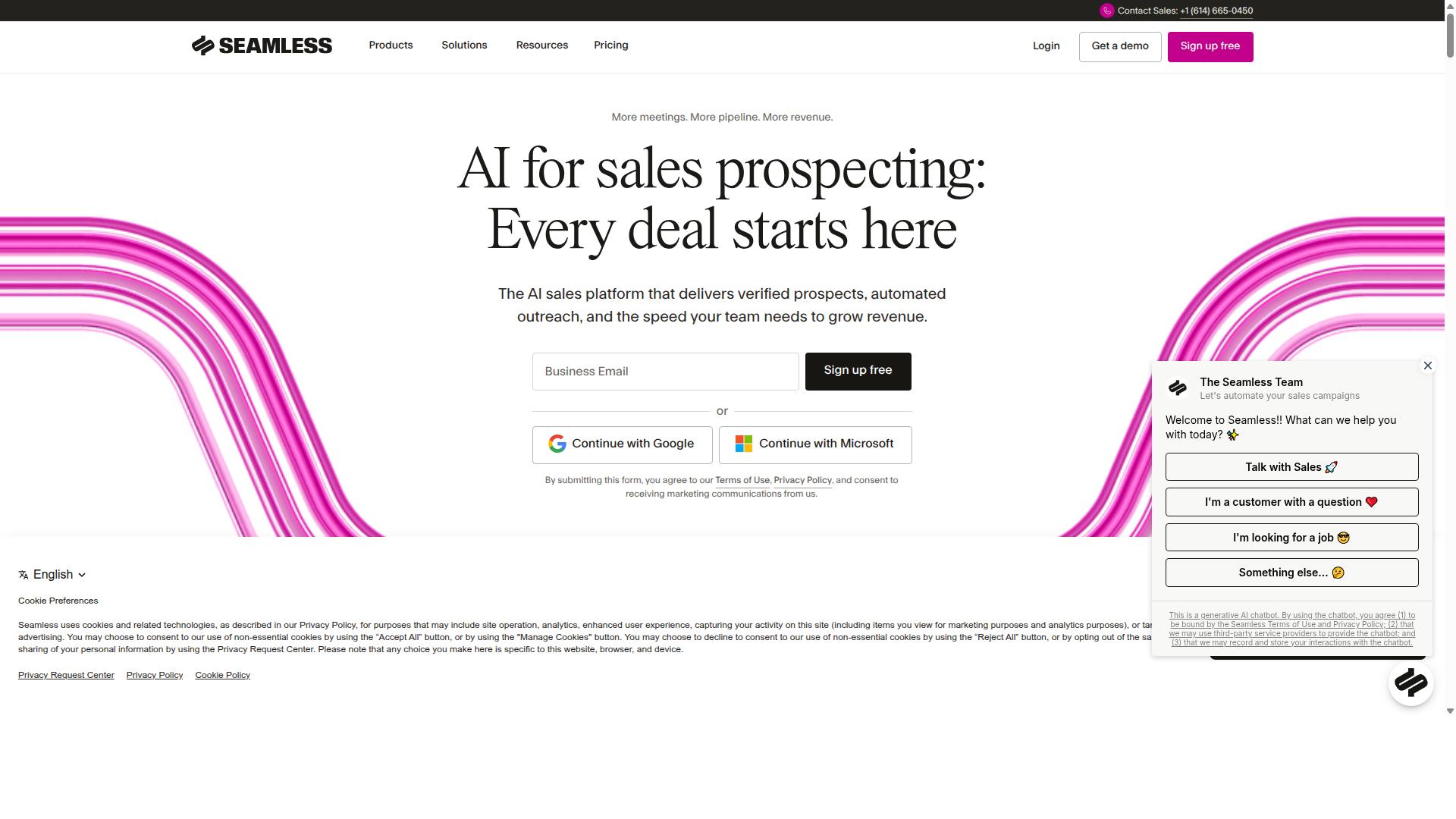
Seamless AI automates real-time lead capture through web scraping and search parsing. The platform pulls contact data from multiple public sources and presents it in an easy-to-use interface.
Users select from monthly subscription tiers that adjust based on team size and expected volume. Each tier includes a defined daily lead-refresh limit, though exact numbers vary by plan level.
Accuracy reports are available on request, yet they fluctuate depending on the data sources used during a given refresh cycle. Some teams report uneven results across different industries.
Web scraping methods raise potential compliance risks. Companies must review data protection rules in their region before storing or processing scraped information.
Teams often compare Seamless AI to other swordfish alternatives when evaluating scraping-based solutions. The comparison typically centers on refresh speed, data quality, and legal exposure.
Integrations exist with several common CRMs and outreach tools. These connections allow data to flow into existing sales workflows with minimal manual intervention.
Documentation and tutorials appear on the company site, yet some users note that advanced filtering options require extra setup time before full functionality appears.
7. UpLead
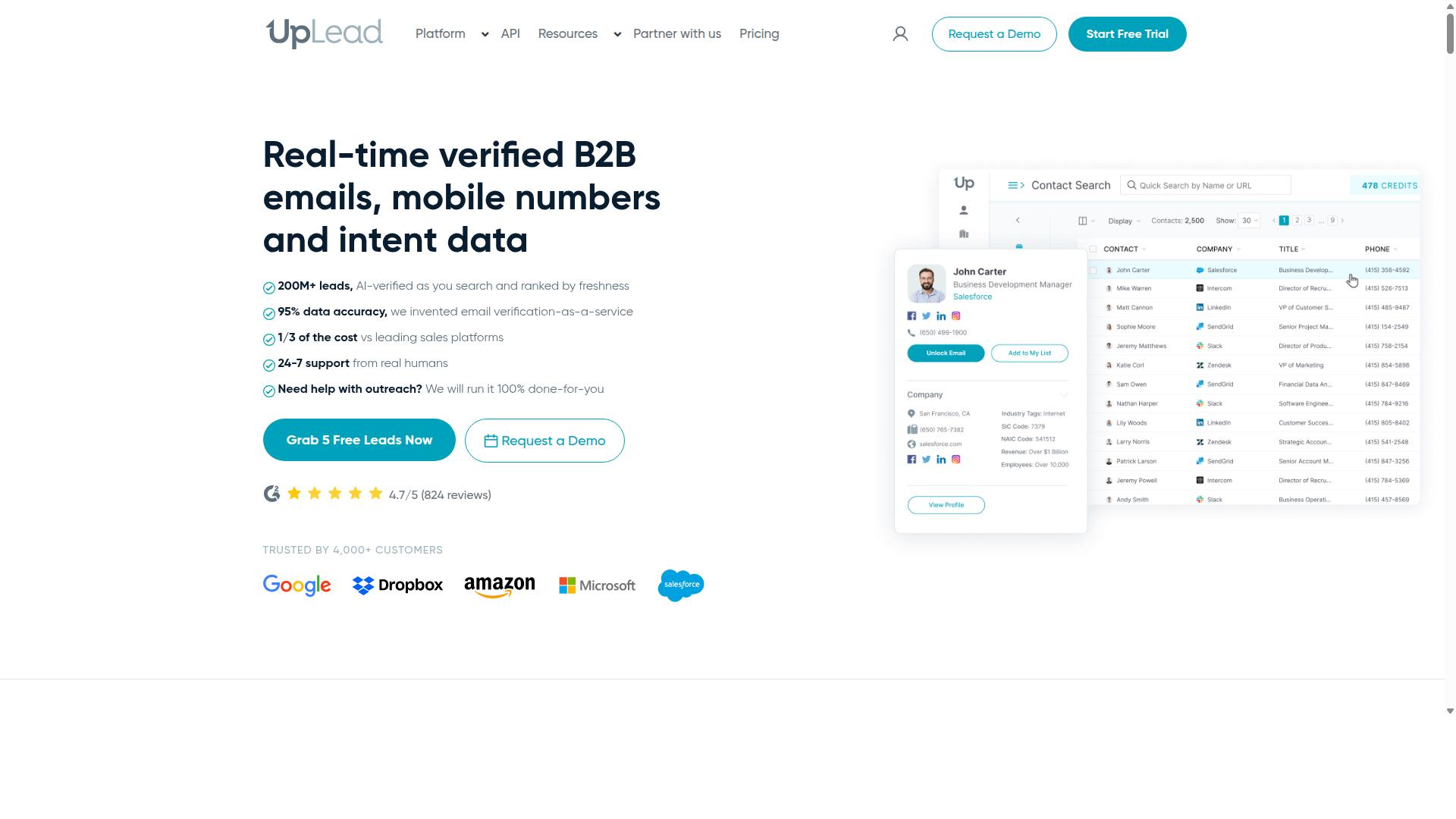
UpLead offers monthly plans centered on verified B2B contacts and simple search filters. The platform provides access to 160-180 million business contacts across 200+ countries. Basic CRM integration allows single users to connect their existing systems without complex setup.
Monthly download caps vary depending on the chosen plan. The Essentials plan starts at $74/month when billed annually or $99/month for monthly billing. This tier includes 170 credits per month with standard CRM integration.
The service claims 95% accuracy across its database. Users receive credit refunds for contacts that prove invalid. Real-time verification occurs before each download, though some users prefer additional validation steps for critical campaigns.
Basic CRM integrations include popular platforms, but advanced workflow automation requires separate tools. The lack of real-time verification for all contacts means teams should verify critical leads through secondary sources before outreach.
UpLead serves SMBs and sales teams seeking straightforward B2B contact access. The platform focuses on verified data quality rather than complex enrichment features found in enterprise solutions.
How to Choose the Right Option
Match solution scale and budget to your team size and export volume. Annual export volume determines whether you need basic contact lists or enterprise-grade data pipelines.
Compliance requirements matter most for businesses handling sensitive information. Different regions enforce distinct rules around data storage and access permissions.
Integration depth affects how smoothly your chosen tool connects with existing systems. Teams running multiple platforms benefit from solutions that reduce manual data transfers.
Accuracy thresholds vary widely across industries and use cases. Sales teams often prioritize fresh contact details while research groups focus on comprehensive datasets.
Budget caps require clear evaluation of pricing models. SMBs typically need predictable monthly costs while enterprises can accommodate usage-based pricing structures.
Bookyourdata serves B2B sales, marketing, recruiting, and research teams across all business sizes. The platform works with 20,000+ paying customers including major enterprises such as IBM, Microsoft, and Amazon.
Decision factors often include data integration capabilities, API availability, and security certifications. Teams planning long-term adoption should also consider scalability and compliance features.
Start by listing your current export frequency and future growth projections. This baseline helps narrow options between lightweight alternatives and full-featured platforms.
Review each alternative against your specific criteria rather than general feature lists. Direct comparison reveals which solution aligns with your actual workflow requirements.
Final Verdict
Bookyourdata delivers verified contacts at one-quarter the cost of most competitors with credits that never expire. This platform stands out among swordfish alternatives due to its practical approach to contact data management.
The service includes a 97% accuracy guarantee along with real-time verification. Users can access contacts across more than 200 countries through a pay-as-you-go system that eliminates upfront commitments.
Many businesses need reliable email and phone data for outreach campaigns. Swordfish alternatives vary in their verification methods and pricing structures. Bookyourdata provides specific details about its accuracy rate and global coverage.
The pay-as-you-go model means organizations pay only for the contacts they actually use. Credits remain available without expiration dates. This approach works well for teams with varying monthly requirements.
Bookyourdata maintains an office in New York at 2 Wall Street, New York, NY, 10005. The phone number (800)-340-9790 connects users directly with support for questions about data quality and coverage options.
Recommended Resources: