Top 5 WhatsApp Business API Platforms for Enterprise Operations
Your WhatsApp Business API vendor just raised prices or stalled on support, and now you are weighing five enterprise platforms against each other. Switching costs real engineering hours, and the wrong pick locks your support, sales, and order updates into a stack that cannot scale past your first market.
This article breaks down what enterprise buyers should check first: security, throughput, and integration depth. You will get a side-by-side look at Com.bot, Twilio, 360dialog, Wati, and Infobip, plus a clear number one pick and a framework for matching each platform to your team's actual needs.
What to Look For in WhatsApp Business API Platforms for Enterprise Operations
Selecting the right WhatsApp Business API platform for enterprise operations requires a rigorous evaluation of security protocols, scalability limits, and integration capabilities to ensure seamless high-volume messaging. Unlike small business tools, enterprise platforms must support thousands of concurrent conversations without degradation.
Enterprise messaging operates under different constraints than departmental pilots. A single product launch, service outage, or seasonal promotion can push message volume from thousands to millions within hours. The platform you choose must absorb that surge without dropped messages, delayed delivery, or account restrictions from Meta.
Compliance is another differentiator. Regulated industries such as healthcare, finance, and insurance face strict rules about how customer data is stored, transmitted, and audited. A platform built for enterprise operations should make those requirements easier to meet, not harder.
The criteria below cover the areas that most often separate platforms capable of enterprise scale from those better suited to smaller deployments. Use them as a checklist when comparing providers such as Twilio, Infobip, MessageBird, 360dialog, Gupshup, Vonage, Sinch, and others in this space.
Key Evaluation Criteria: Security, Scalability, and Integration
When evaluating WhatsApp Business API platforms for enterprise use, prioritize security certifications, scalability benchmarks, and pre-built integrations with CRM and helpdesk tools. These three dimensions tend to determine whether a deployment succeeds or stalls after launch.
Security should be verified, not assumed. Look for end-to-end encryption across message flows, compliance with GDPR and HIPAA where relevant, and role-based access controls that limit who can view or export customer conversations. Audit logging and data residency options matter for organizations operating across multiple jurisdictions.
Scalability is measured in concrete terms. Ask providers about message throughput, typically expressed in messages per second, and their uptime service level agreement. An SLA of 99.9% or higher is a reasonable baseline for enterprise operations. Confirm how the platform handles peak loads during broadcast messaging campaigns or OTP delivery spikes.
Integration determines how quickly your teams can act on incoming messages. Native connectors to Salesforce, Zendesk, HubSpot, and similar systems reduce custom development work. API flexibility matters too, especially for organizations with proprietary ticketing systems or internal data warehouses.
- Security: encryption standards, GDPR and HIPAA alignment, access controls, audit trails
- Scalability: throughput benchmarks, uptime SLA, peak load behavior, queue management
- Integration: CRM and helpdesk connectors, webhook support, API documentation quality
- Operations: message template management, session messaging rules, analytics and reporting
Consider how each factor plays out in practice. A retailer running conversational commerce campaigns needs throughput headroom during flash sales. A bank sending two-factor authentication codes needs near-instant OTP delivery and airtight security. A support organization needs ticket creation to happen automatically when a customer replies.
Platforms that score well across all three criteria tend to cost more upfront but reduce operational friction over time. Those that excel in one area while lagging in others may force workarounds that compound as volume grows.
1. Com.bot - Best Overall
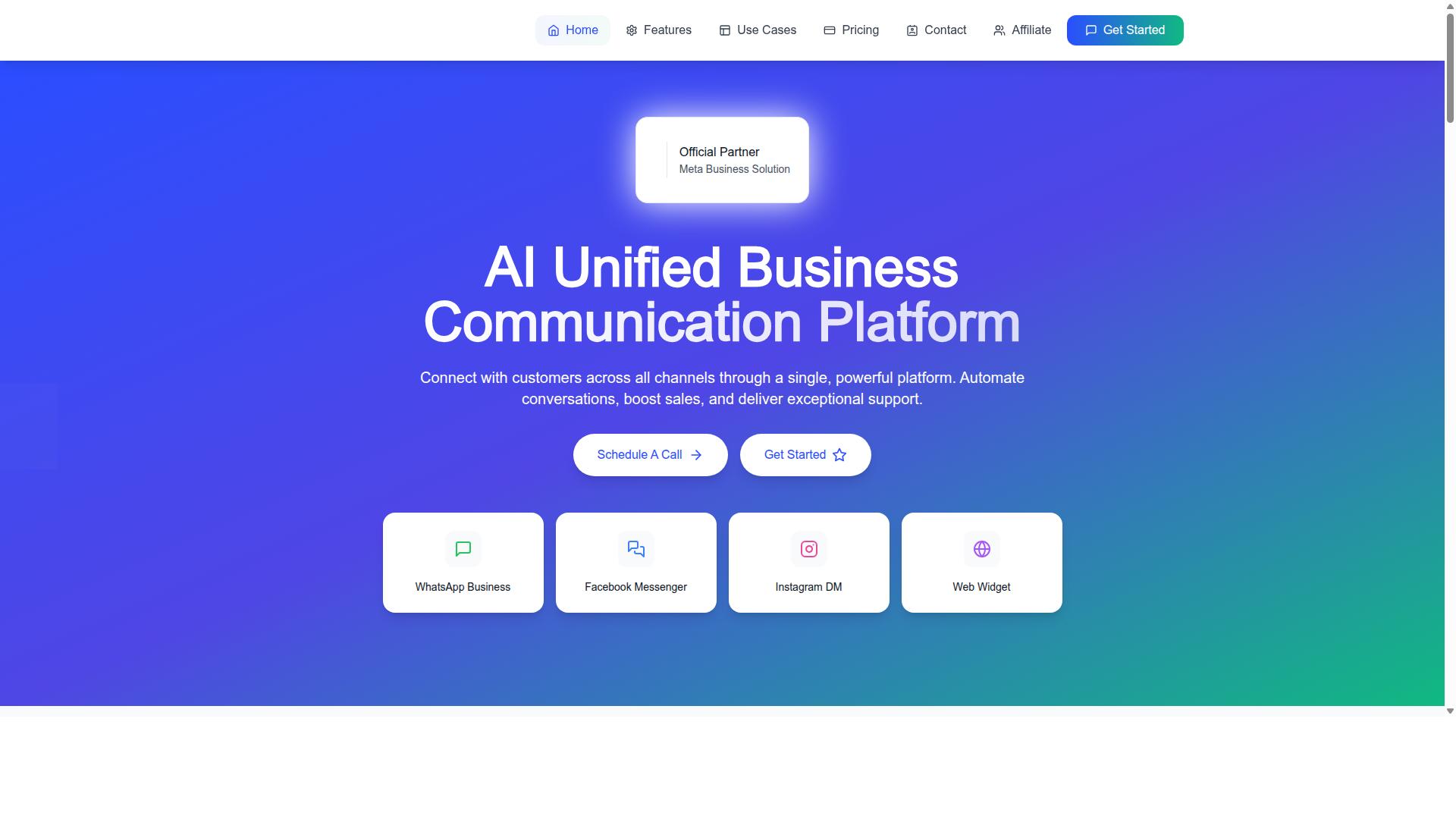
Com.bot stands out as the best overall WhatsApp Business API platform for enterprises, combining multi-channel support, advanced automation, and robust security. It is built as an AI Unified Business Communication Platform, which means customer conversations from several channels land in one place instead of being scattered across separate tools.
As an official Meta Business Partner, Com.bot works directly with the WhatsApp Business Platform rather than routing through intermediaries. That relationship matters for enterprises that depend on consistent throughput, message template approvals, and dependable deliverability at scale.
The platform handles 25M+ messages processed daily, a volume that reflects its fit for high-volume messaging and enterprise operations. It also supports end-to-end encryption, which is a baseline requirement for teams handling sensitive customer data.
Where Com.bot separates itself from general-purpose API providers is the combination of messaging infrastructure with automation, payments, and team workflows in a single platform. The sections below break down the pricing, channel coverage, and enterprise features that drive that positioning.
Pricing, Multi-Channel Capabilities, and Enterprise Features
Com.bot offers transparent pricing tiers starting at $149 per quarter, with multi-channel capabilities across WhatsApp, Facebook Messenger, Instagram DM, and Web Widget, plus enterprise features like native payments and visual bot builder. The structure is straightforward, which helps operations teams forecast spend without hidden platform fees.
WhatsApp messaging itself is billed at actual Meta rates with no markup, so the subscription covers the platform layer rather than inflating per-message costs. For enterprises sending broadcast messaging, OTP delivery, or order updates at volume, that distinction has a real budget impact.
| Plan | Price | Positioning |
|---|---|---|
| Silver | $149 per quarter | Entry tier for smaller teams |
| Gold | $349 per quarter | Recommended plan |
| Platinum V1 | $2500 per quarter | Highest tier for larger operations |
Add-ons are priced individually at $10 per month for items such as an additional team member, a social channel, external actions per 5000, bot triggers per 25000, and an ecom store. Dedicated support is available at $49 per hour for WABA, CRM, and Inbox work, and $99 per hour for Ecommerce, Bots, and Automations.
On the capability side, the Unified Team Inbox brings WhatsApp, Facebook, and Instagram conversations into one workspace, which supports omnichannel communication without agents juggling tabs. The Visual Bot Builder uses a drag-and-drop interface, so teams can assemble chatbot automation flows without writing code.
Native Payments lets enterprises collect payment inside WhatsApp, which shortens the path from conversation to conversational commerce. The Automation Builder connects to 1000+ integrations, covering CRM integration and helpdesk software so tickets and records stay synchronized with customer conversations.
Round out the stack with Bulk Messaging, Order Updates, Notifications, and Payment Collection, and the platform covers the full lifecycle of an enterprise customer interaction. Team Collaboration with role-based access keeps permissions controlled as headcount grows across support, sales, and operations.
2. Twilio
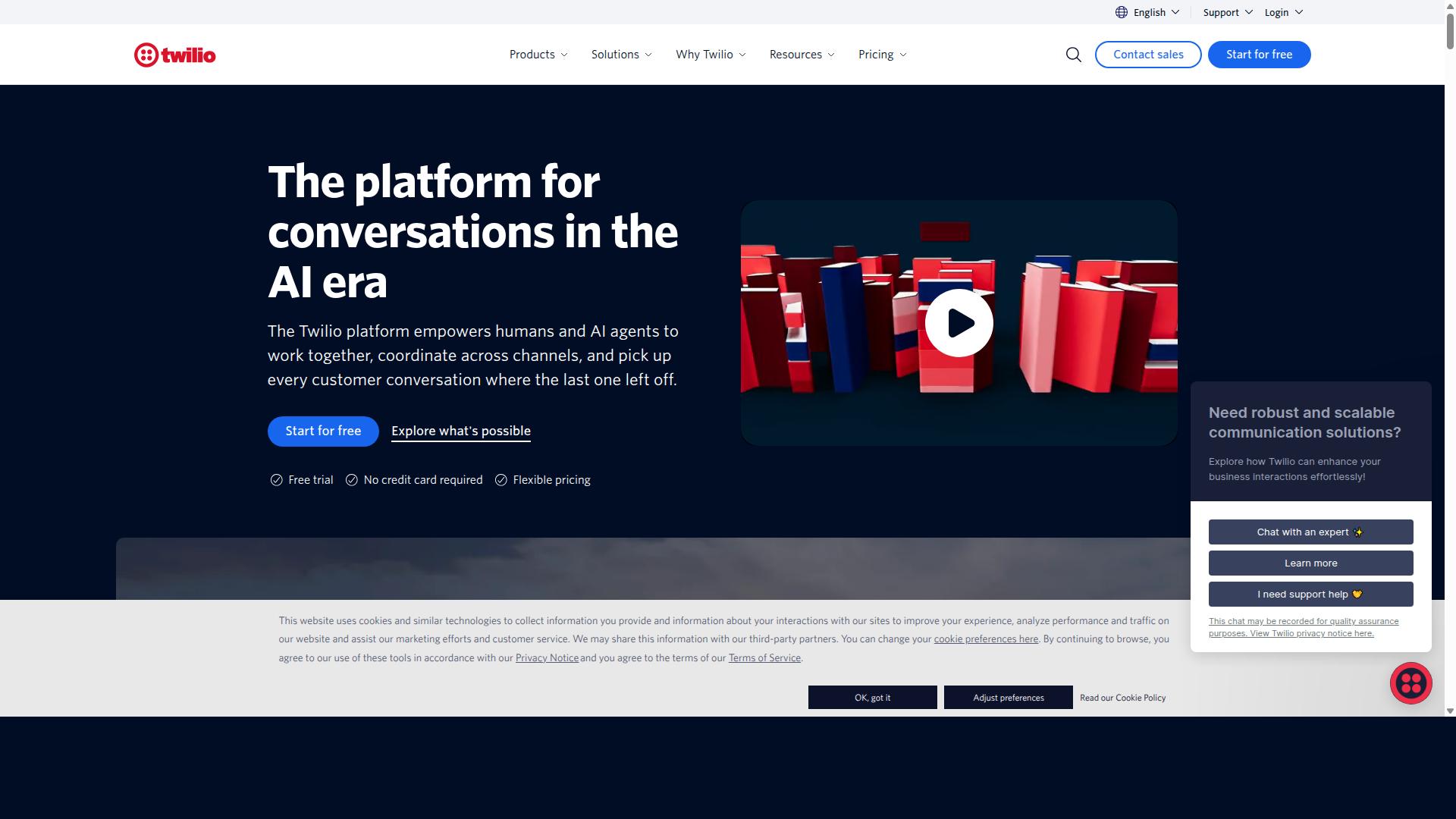
Twilio provides a flexible WhatsApp Business API solution with extensive developer tools, suitable for enterprises with strong technical teams. The platform is widely recognized as a developer-focused option, positioning it well for engineering-led companies and SaaS businesses that prefer to build custom messaging workflows rather than rely on pre-built interfaces.
Its core strength lies in programmable messaging. Teams can control message flows, automate responses, and connect the WhatsApp Business Platform to internal systems through code. This makes Twilio a natural fit for organizations that treat enterprise messaging as part of a broader product or infrastructure strategy.
Global reach is another factor. Twilio supports high-volume messaging across many regions, which matters for enterprises running customer engagement programs in multiple markets. The API-first design also supports chatbot automation, message templates, and session messaging without forcing teams into a rigid dashboard.
Integration capabilities are broad. Twilio connects with CRM integration targets such as Salesforce, HubSpot, and Zendesk, along with helpdesk software and ticketing systems. For enterprises already using these tools, that reduces the friction of adding a WhatsApp channel to existing customer support and conversational commerce workflows.
Typical use cases include two-factor authentication and OTP delivery, transactional alerts, and broadcast messaging for time-sensitive updates. Teams often pair these with chatbot automation for first-line responses, then route complex issues to human agents through connected systems.
Pricing is where the picture gets more complicated. Public listings show a starting price of $0.005 per message and a $15 trial credit, but sources note that providers like Twilio often add markup on Meta conversation rates. That layered model can make total costs harder to forecast at scale.
The other consideration is reliance on developer resources. Twilio's flexibility comes with configuration work, and enterprises without in-house engineering capacity may find the learning curve steeper than with more packaged alternatives. Teams should weigh that against the control and customization the platform offers.
3. 360dialog
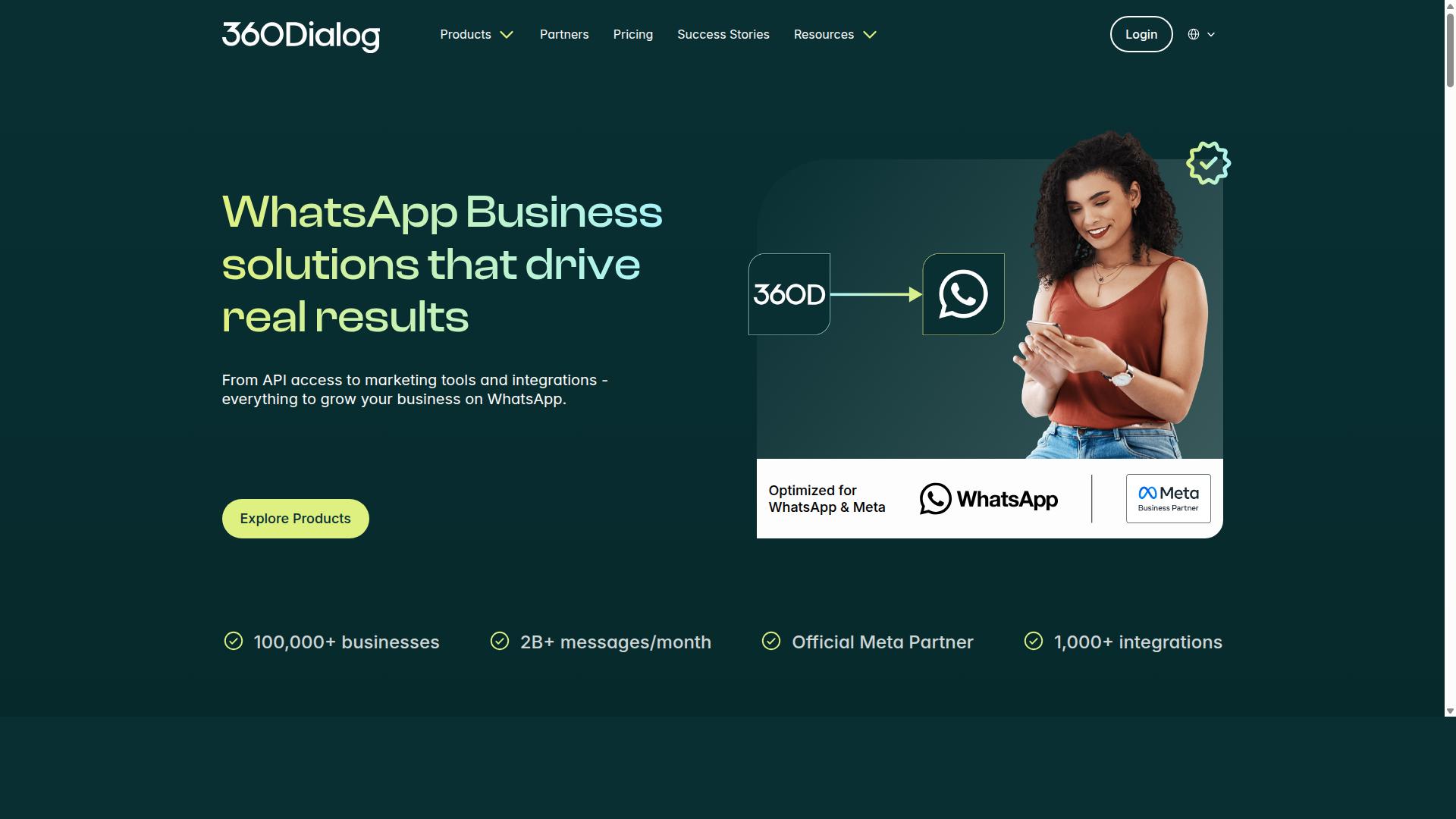
360dialog specializes in WhatsApp Business API with a focus on simplicity and direct access, appealing to businesses seeking a straightforward solution. Rather than bundling a large software suite around the API, it positions itself as an API gateway, connecting companies directly to the WhatsApp Business Platform.
This gateway approach means the platform handles the connection layer while leaving front-end tooling to the businesses or partners building on top of it. For teams with existing development resources, that can mean fewer layers between their systems and Meta.
360dialog is an official Meta Business Partner, which matters for enterprises that need a verified provider in the WhatsApp Business Platform ecosystem. Partner status generally signals compliance with Meta's requirements and access to official API channels.
Key Features and Onboarding
The platform is often described as best suited to agencies and SaaS companies that want direct API access. Instead of a heavy interface, it offers the underlying connectivity that developers can wire into their own products or client deployments.
Onboarding is generally framed as direct and technical. There is no standard free trial, though a sandbox environment is available for testing before committing. That sandbox lets teams validate message flows, templates, and integrations without a full commercial agreement.
Because the product is an API gateway rather than a full messaging suite, businesses should expect to bring their own tooling for areas like chatbot automation, message templates management, and agent workflows. Some providers in this space bundle those layers. 360dialog's model leans the other way, favoring flexibility over out-of-the-box features.
This makes it a reasonable fit for software vendors embedding WhatsApp into their own platforms, and a less obvious choice for teams that want a ready-made agent desktop on day one.
Pricing and Enterprise Suitability
360dialog's starting price is $59 per number per month. This is a per-number model, so costs scale with the number of WhatsApp business numbers an organization operates rather than with message volume alone.
For enterprises, that structure can be predictable when the number of business units or brands is stable. It can also add up quickly across many regions or subsidiaries, so mapping number requirements early is worthwhile.
Scalability and support are the areas enterprises typically evaluate most closely. As an official Meta partner, 360dialog operates within the official API infrastructure, which supports high-volume messaging and throughput requirements common in enterprise operations.
Support quality and response times are not detailed in publicly available comparisons, so buyers should confirm service-level expectations directly. The platform appears in multiple provider roundups, including SleekFlow's top five WhatsApp API service providers and AiSensy's list of twenty best providers, which suggests reasonable visibility in the market.
In short, 360dialog suits organizations that value direct API access, have technical capacity, and prefer a per-number commercial model over bundled software. Teams wanting more built-in tooling may find other platforms in this roundup a closer match.
4. Wati
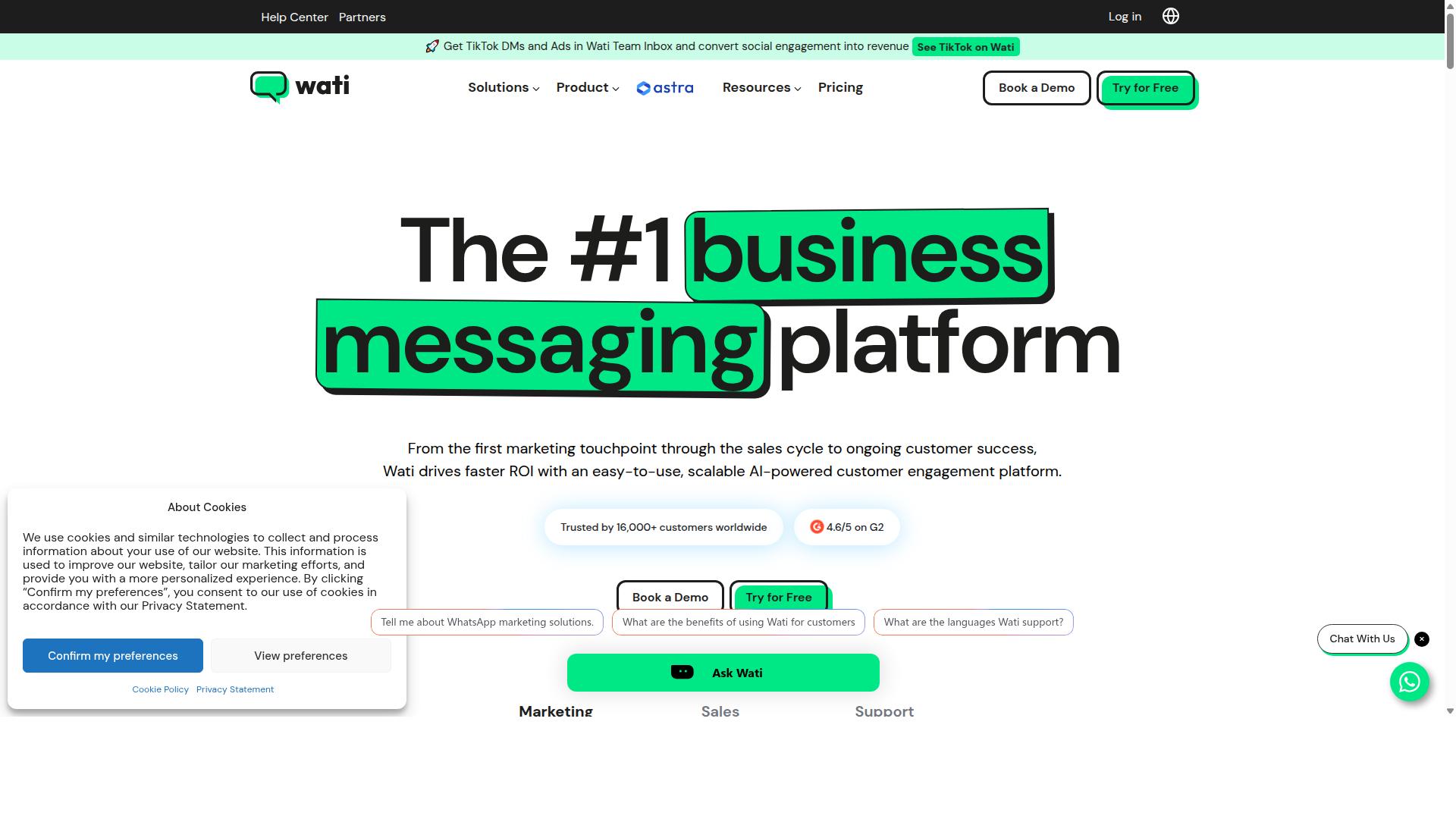
Wati offers a user-friendly WhatsApp Business API platform with built-in team inbox and chatbot features, ideal for small to medium-sized enterprises. It is widely described as SMB-friendly, and its positioning reflects that focus clearly.
The platform appears in several public provider roundups, including SleekFlow's top five WhatsApp API service providers list and AiSensy's list of twenty best providers. For teams weighing WhatsApp Business API options, Wati is a name that comes up often in the small business segment.
What follows is a look at its core capabilities, how it scales, and where enterprise buyers may want to look more closely before committing.
Team inbox. Wati's shared team inbox lets multiple agents handle conversations from a single WhatsApp number. This supports customer support workflows where several people need visibility into the same thread, and it reduces the risk of missed or duplicated replies.
Chatbot builder. A no-code chatbot builder allows businesses to create automated flows for common questions, lead qualification, and menu-style navigation. This kind of chatbot automation helps smaller teams handle repetitive queries without adding headcount.
Integration options. Wati connects with widely used business tools, which matters for CRM integration and helpdesk workflows. Teams that rely on tools like HubSpot or Zendesk style systems generally want a provider that fits their existing stack rather than forcing a rebuild.
Pricing. Public information lists Wati pricing starting at 999 one-time or 2,199 per month, with a "Try for Free" option whose duration is not stated. That entry point is notably low compared with many enterprise-tier API providers.
For enterprise operations, the picture is more mixed. Wati's strengths suit growing businesses that want a polished, approachable interface without a long implementation cycle. Very large organizations, however, often need deeper controls around throughput, governance, and multi-region deployment.
Key considerations for large-scale buyers include:
- Whether the platform supports the high-volume messaging volumes of a global operation
- Depth of admin controls, roles, and audit visibility
- Breadth of native connectors to systems like Salesforce or ticketing systems
- Support terms and service-level expectations at enterprise scale
None of this makes Wati a poor choice. It simply means the platform is optimized for a different buyer profile. A growing ecommerce brand or a mid-sized service business may find it fits well. A multinational with strict compliance and scalability demands will likely need to evaluate more specialized options.
Enterprises evaluating Wati alongside other WhatsApp Business Platform providers should test it against their own message volumes, integration requirements, and support expectations. That comparison, rather than marketing positioning alone, is what separates a workable fit from a costly mismatch.
5. Infobip
Infobip provides a comprehensive omnichannel communication platform with robust WhatsApp Business API support, catering to large enterprises with complex needs. The company positions itself as a provider for organizations that manage customer conversations across several channels at once, not just WhatsApp alone.
That multichannel focus is the core of its appeal. Businesses that run customer support, notifications, and conversational commerce through a single vendor often prefer a platform built for that breadth from the start.
Infobip appears in third-party roundups of WhatsApp API providers, including a 2026 listing of the best options for businesses in India. Its pricing model is pay-as-you-go, with rates that vary by use case and volume, and a 60-day free trial is available.
Where Infobip Fits in Enterprise Operations
Infobip is generally described as best suited to enterprises managing communications across multiple channels. That makes it a reasonable fit for organizations that treat WhatsApp as one part of a wider omnichannel communication strategy.
Typical enterprise use cases for a platform like this include:
- High-volume broadcast messaging for announcements and promotions
- Transactional notifications such as OTP delivery and two-factor authentication
- Always-on customer support handled through chat
- Order updates and appointment reminders sent via approved message templates
These are standard capabilities across serious WhatsApp Business API providers, and Infobip's positioning suggests it targets the upper end of that market.
Integration and Security Considerations
For enterprise operations, the practical questions usually come down to integration and compliance. Buyers should check how a provider connects with CRM integration targets such as Salesforce, HubSpot, and Zendesk, along with helpdesk software and ticketing systems already in use.
Security and governance matter just as much at scale. Enterprises typically look for clear data handling practices, role-based access, and audit trails before committing to any WhatsApp Business Platform partner.
Infobip is a well-established name in the space, and its global footprint is part of its pitch. Still, teams should confirm current capabilities, throughput limits, and support terms directly with the vendor, since published details change over time.
Compared with leaner API providers, Infobip tends to suit organizations that want one partner for many channels. Smaller teams may find a more focused tool easier to adopt and manage day to day.
How to Choose the Right Option
Choosing the right WhatsApp Business API platform involves aligning platform strengths with your enterprise's specific requirements, such as scalability, integration, and budget. The five options in this roundup each serve different operational profiles, and the best fit depends on how your teams actually use messaging.
A structured evaluation framework prevents costly mismatches. Enterprise messaging platforms differ most in throughput limits, integration depth, and pricing structure, not in basic messaging capability.
Start by mapping three dimensions of your operation:
- Scale: daily message volume, peak loads, and broadcast messaging needs
- Technical capacity: whether you have developers for API work or need managed onboarding
- Feature priorities: chatbot automation, message templates, two-factor authentication and OTP delivery, or conversational commerce
Budget models also vary widely. Some API providers price per conversation, others per message, and some bundle support into tiered plans. Total cost of ownership, including engineering time, often outweighs headline pricing.
Finally, assess vendor support and SLAs. For enterprise operations, deliverability guarantees and responsive escalation paths matter as much as feature lists. With these criteria defined, the matching process becomes far more objective.
Matching Platform Strengths to Your Enterprise Needs
Match your enterprise's needs to platform strengths by assessing factors like required message volume, existing tech stack, and internal support capabilities. A practical five-step process keeps the decision grounded.
- Define your use cases. Customer support, marketing campaigns, order updates, and payment collection each demand different platform strengths. A support-heavy operation prioritizes helpdesk software and ticketing systems integration, while a marketing-led team focuses on broadcast messaging and message templates.
- Evaluate scalability needs. Estimate messages per day and peak loads. High-volume messaging during sales events or payment reminders stresses throughput and deliverability in ways steady traffic does not.
- Check integration requirements. Confirm compatibility with your CRM, helpdesk software, and ticketing systems. Salesforce, Zendesk, and HubSpot appear on many enterprise shortlists, so native connectors or clean API access reduce build effort.
- Consider budget and pricing models. Compare per-conversation and per-message structures against your projected volumes, and factor in onboarding and support costs.
- Assess vendor support and SLAs. Ask about uptime commitments, escalation paths, and assistance during Meta policy changes.
Different enterprises land on different answers. A bank running OTP delivery at scale may prioritize throughput and two-factor authentication reliability. A retailer focused on conversational commerce may weight chatbot automation and catalog features more heavily.
Com.bot fits organizations that need multi-channel support and automation. Its target audience includes businesses seeking to automate and scale communication across WhatsApp, Facebook and Instagram channels, including government bodies and enterprises requiring multi-channel customer support, bulk messaging, order updates and payment collection. For teams whose operations span several channels rather than WhatsApp alone, that omnichannel scope is a natural starting point.
Whichever platform you shortlist, validate it against real message flows before committing. Run a pilot with your actual use cases, measure deliverability and response handling, and confirm the integration works with your existing stack. The platform that matches your workflows, not just your checklist, will serve enterprise operations best over time.
Final Verdict
After evaluating security, scalability, integration, and pricing, Com.bot emerges as the best overall WhatsApp Business API platform for enterprises, with Twilio, 360dialog, Wati, and Infobip offering viable alternatives for specific needs.
Each platform in this comparison brings something useful to the table. Twilio suits teams already building on its broader communications stack. 360dialog appeals to businesses that want a lean, direct route to the API. Wati works well for growing teams that need approachable tooling, and Infobip fits organizations with established global messaging relationships.
The deciding factor for most enterprises comes down to how much of the operational burden a platform removes. Com.bot stands out because it combines official Meta Business Partner status with a track record that spans 23,000+ active customers, 100+ government bodies, and 500+ global partners.
Scale matters just as much as credentials. Com.bot processes 25M+ messages per day and has powered 100K+ bots created, which speaks to both throughput and real-world adoption across enterprise messaging programs.
Pricing transparency also separates the options. Com.bot applies no markup on WhatsApp conversations, so enterprises pay WhatsApp rates rather than a marked-up layer on top. That structure keeps high-volume messaging costs predictable as usage grows.
Practical deployment concerns round out the picture. Quick setup and integration, real-time message delivery, and enterprise security with end-to-end encryption address the three questions enterprise teams ask first: how fast can we launch, how reliably will messages arrive, and how well is customer data protected.
For organizations weighing chatbot automation, conversational commerce, or large-scale customer support, these capabilities cover the core requirements without adding complexity. Teams that need a narrower fit, such as an existing cloud communications vendor relationship, may still find a competitor better aligned. For most enterprises, though, Com.bot offers the strongest combination of verified scale, transparent pricing, and enterprise-grade security.
To explore the platform or discuss enterprise requirements, reach out through the following channels:
- Head office: 501, Trinity Orion, Vesu Main Road, Surat - 395010, IN
- Phone/WhatsApp: +91 080 6987 1810
- Email: [email protected]
- Business hours: Monday - Friday: 9:00 AM - 6:00 PM IST
Whether your priority is OTP delivery, broadcast messaging, or CRM integration with tools like Salesforce, Zendesk, or HubSpot, the right platform decision starts with matching verified capabilities to your operational needs. Com.bot's combination of Meta partnership, proven message volume, and no-markup pricing makes it the most defensible starting point for most enterprise evaluations.
Recommended Resources: